
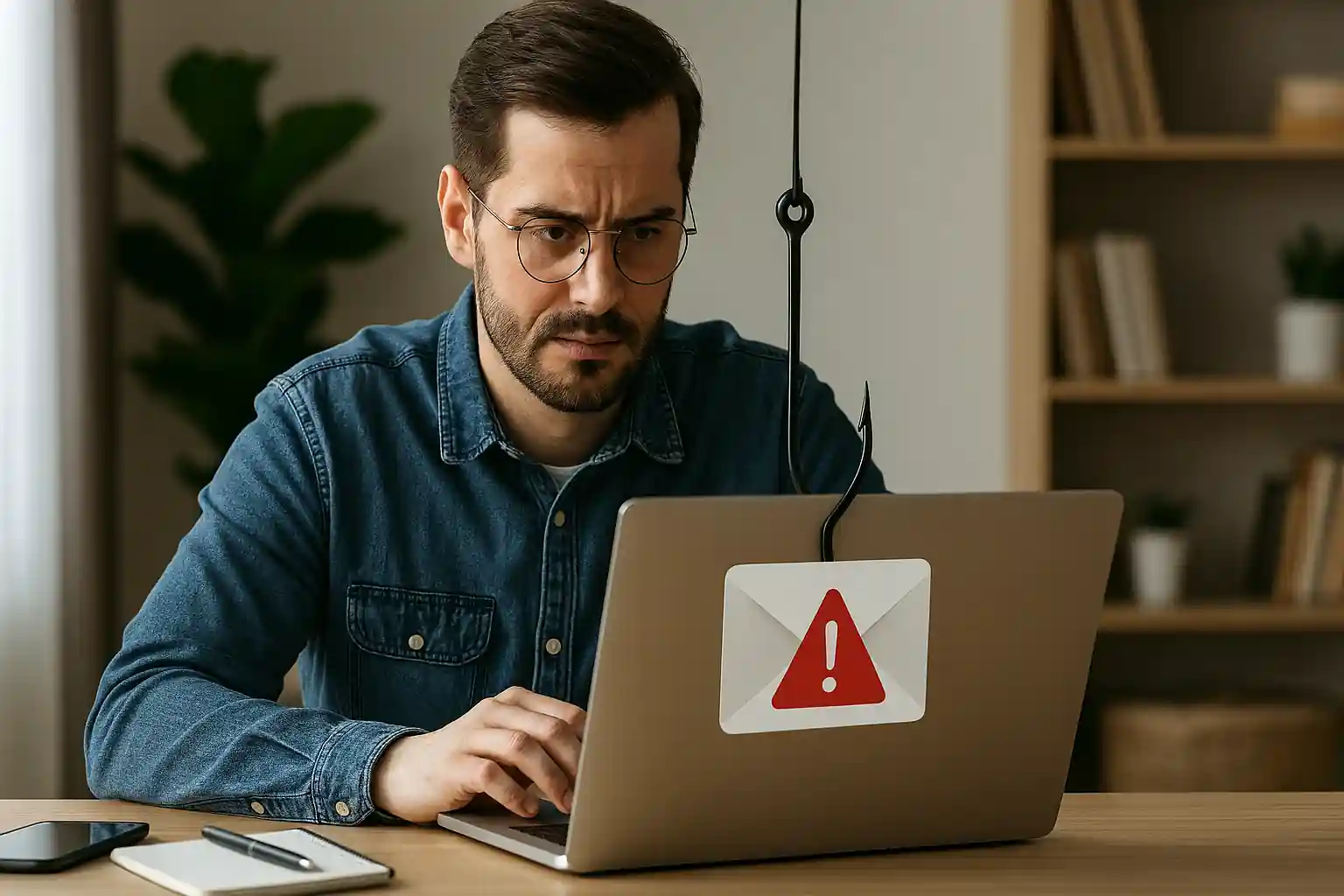
What Is Spear Phishing? The Complete Guide to Understanding and Preventing Targeted Email Threats
If you’re searching for what is spear phishing, you’re already one step ahead of cybercriminals. In today’s hyper-connected digital landscape, businesses face constant cyber risks, and one of the most dangerous is the spear phishing attack.
At Mail Experts, we help organizations understand, detect, and prevent advanced email threats before they turn into costly incidents. This comprehensive guide will explain:
-
The spear phishing definition
-
How a phishing attack differs from a spear phishing attack
-
Real examples of spear phishing
-
How spear phishing work in real-world scenarios
-
The difference between phishing vs spear phishing
-
Proven best practices for spear phishing prevention
-
How to protect against spear phishing and prevent spear phishing attacks
If your organization handles sensitive data, customer records, financial information, or internal credentials, this page will help you stay ahead of spear phishing threats.
Spear Phishing Definition: What Is Spear Phishing?
Let’s start with a clear spear phishing definition.
A spear phishing attack is a targeted form of phishing where an attacker carefully researches and customizes a fraudulent message to deceive a specific individual, department, or company.
Unlike generic phishing attacks, which are mass-distributed, spear phishing is personal and precise.
Spear phishing is a targeted cybercrime strategy designed to:
-
Steal login credentials
-
Capture usernames and passwords
-
Access confidential information
-
Install malware
-
Execute business email compromise
-
Trigger a data breach
Spear phishing is a highly deceptive technique that relies heavily on social engineering tactics and impersonation.
Phishing Attack vs Spear Phishing Attack
Understanding phishing vs spear phishing is critical for effective protection.
What Is a Phishing Attack?
A phishing attack is a broad, deceptive message sent to a large number of recipients. These phishing campaigns often aim to trick anyone who responds.
Phishing is a broad category of cybercrime where:
-
Attackers send generic phishing emails
-
They create fake login pages
-
They impersonate brands
-
They attempt to steal credential information
Phishing attacks involve mass distribution. They don’t focus on a single target.
What Is a Spear Phishing Attack?
A spear phishing attack, on the other hand, focuses on a specific individual or group. It is a targeted attack using personalized details.
Spear phishing emails often include:
-
The victim’s name
-
Their job title
-
Internal company references
-
Spoofed executive identities
-
Information gathered from social media accounts
Unlike regular phishing, spear phishing is customized and strategic.
Spear Phishing vs Phishing: Key Differences
| Feature | Phishing | Spear Phishing |
|---|---|---|
| Audience | Mass recipients | Specific individual |
| Personalization | Minimal | Highly personalized |
| Tactics | Generic scam | Advanced social engineering |
| Risk | Moderate | Extremely high |
| Intent | Broad credential theft | Targeted access & data theft |
When comparing spear phishing vs phishing, remember:
-
Phishing is volume-based.
-
Spear phishing is precision-based.
How Spear Phishing Work in Real Life
Many people ask: How does spear phishing work?
Step 1: Research and Reconnaissance
Spear phishers collect information from:
-
LinkedIn profiles
-
Company websites
-
Press releases
-
Public databases
-
Social media accounts
They gather personal information, job roles, and company structure.
Step 2: Crafting Convincing Emails
They then craft convincing emails that:
-
Appear to come from a trusted source
-
Use a spoofed email address
-
Contain a malicious link
-
Attach infected files with malware
-
Create a sense of urgency
This is where social engineering becomes powerful.
Step 3: Exploitation
Once the victim clicks:
-
Login pages steal login credentials
-
Attachments install malware
-
Forms collect sensitive information
-
Payments are redirected in a business email compromise
This is how spear phishing work at a technical and psychological level.
What Makes Spear Phishing So Dangerous?
Spear phishing is dangerous because:
-
It bypasses traditional spam filters
-
It defeats basic email security
-
It avoids detection by common security tools
-
It targets high-value employees
-
It leads to massive data breach incidents
Because it is a targeted form of phishing, it often succeeds where regular phishing fails.
Examples of Spear Phishing Attacks
Let’s explore real-world examples of spear phishing.
1. Executive Impersonation
An attacker sends a spoofed email to the finance team pretending to be the CEO. The email demands urgent payment.
This is a classic whaling attack, a subtype of whaling targeting executives.
2. IT Credential Reset Scam
An employee receives a spear phishing email claiming their password expired. The email includes a malicious link to reset credentials.
The fake portal captures usernames and passwords.
3. Vendor Invoice Fraud
A supplier receives a malicious email claiming payment details have changed. Funds are redirected.
This is part of spear phishing campaigns targeting financial operations.
4. Clone Phishing
In clone phishing, attackers replicate a legitimate email but replace attachments with malware.
5. Payroll Data Theft
HR receives a convincing spear phishing message requesting employee tax records. The result? Stolen sensitive data.
Spear Phishing Targets: Who Is at Risk?
Spear phishing targets are typically:
-
CEOs (whaling)
-
CFOs
-
HR teams
-
IT administrators
-
Sales teams
-
Procurement departments
-
Legal departments
Because they handle valuable data, they are prime victims.
Within an organization, attackers often focus on:
-
Employees with access to financial systems
-
Users with administrative privileges
-
Individuals who manage customer records
Spear Phishing vs Whaling
Whaling is a specialized form of spear phishing that targets executives.
A whaling attack typically:
-
Impersonates board members
-
Demands wire transfers
-
Requests confidential contracts
-
Attempts to steal sensitive data
Whaling is considered a more advanced form of spear phishing.
Phishing and Spear Phishing: Understanding the Bigger Picture
When discussing phishing and spear phishing, it’s important to understand:
-
Phishing is mass-based.
-
Spear phishing is personalized.
-
Both rely on social engineering tactics.
-
Both aim to steal sensitive information.
However, spear phishing is often part of sophisticated phishing operations.
Social Engineering: The Core of Spear Phishing
Spear phishing relies on social engineering.
Attackers:
-
Exploit trust
-
Mimic authority
-
Create urgency
-
Manipulate emotions
They may say:
-
“Immediate action required”
-
“Your account is compromised”
-
“Confidential request from CEO”
These are classic phishing tactics.
They use social engineering to bypass logic and trigger reaction.
Phishing Prevention and Spear Phishing Prevention
Let’s move into solutions.
Phishing Prevention Basics
General phishing prevention includes:
-
Updated spam filters
-
Secure email security tools
-
Multi-layered security solutions
-
Monitoring spoofed email addresses
-
Blocking suspicious domains
But for spear phishing, you need more.
Spear Phishing Prevention: Advanced Protection Strategies
Effective spear phishing prevention includes:
1. Multi-Factor Authentication
Adding multi-factor authentication provides an extra layer of security even if credentials are stolen.
2. Security Awareness Training
Regular security awareness training helps employees identify:
-
Spear phishing attempts
-
Spoofed email
-
Suspicious links
-
Phishing messages
3. Simulated Phishing
Running simulated phishing campaigns improves awareness and response.
4. Advanced Email Security Solution
A powerful email security solution detects:
-
Domain spoofing
-
Impersonation
-
Malicious attachments
-
Targeted attack indicators
At Mail Experts, our advanced phishing protection service is specifically designed to protect against spear phishing and block targeted threats before they reach inboxes.
Protect Against Spear Phishing: Best Practices
To protect against spear phishing, follow these best practices:
Verify Requests
Always verify financial or credential requests verbally.
Inspect Email Address Carefully
Look for subtle changes in the email address.
Avoid Clicking Unknown Links
Never click a suspicious malicious link.
Enable Advanced Security Tools
Use enterprise-level security tools.
Limit Data Exposure
Reduce public exposure of employee roles.
Deploy Email Authentication Protocols
Use SPF, DKIM, and DMARC to prevent spoofed email addresses.
Educate the Security Team
Your security team must monitor:
-
Spear phishing campaigns
-
Phishing attempts
-
Internal anomalies
Prevent Spear Phishing Attacks Before They Happen
To truly prevent spear phishing attacks, organizations must:
-
Combine technology + training
-
Use layered security solutions
-
Conduct continuous monitoring
-
Audit internal access privileges
-
Invest in specialized phishing protection
If your business uses Outlook, learn how to properly report phishing in Outlook to minimize internal risk exposure.
How Spear Phishing Leads to Data Breaches
A single successful spear phishing attack can:
-
Install malware
-
Trigger ransomware
-
Compromise login credentials
-
Cause financial fraud
-
Lead to full-scale data breach
When attackers steal sensitive data, the impact includes:
-
Legal penalties
-
Reputation damage
-
Regulatory fines
-
Operational downtime
Spear Phishing Is a Highly Evolving Threat
Spear phishing is a highly adaptable cybercrime tactic.
Attackers constantly:
-
Improve phishing tactics
-
Use AI to personalize
-
Launch coordinated spear phishing campaigns
-
Exploit internal company structures
Staying ahead of spear phishing requires proactive defense.
Defenses Against Spear Phishing
Strong defenses against spear phishing include:
-
Advanced threat detection
-
Real-time domain monitoring
-
Behavioral analysis
-
Threat intelligence feeds
-
Zero-trust access policies
These measures help organizations stay ahead of spear phishing attacks.
Why Regular Phishing Protection Isn’t Enough
Unlike regular phishing, spear phishing:
-
Is harder to detect
-
Is deeply personalized
-
Targets high-value employees
-
Often bypasses spam filters
That’s why standard email security isn’t sufficient.
You need:
-
AI-powered detection
-
Impersonation analysis
-
Behavioral anomaly detection
-
Enterprise-level phishing protection
Business Email Compromise and Spear Phishing
Business email compromise is one of the most financially devastating results of spear phishing.
It often involves:
-
Fake wire transfers
-
Executive impersonation
-
Fraudulent vendor updates
These incidents are usually the result of carefully executed spear phishing work.
Why Choose Mail Experts for Phishing Protection?
At Mail Experts, we specialize in:
-
Enterprise-level email security solution
-
Advanced phishing prevention
-
Comprehensive spear phishing prevention
-
Protection from phishing scams
-
Defense against clone phishing
-
Blocking sophisticated phishing attacks
-
Monitoring spoofed email addresses
We understand that spear phishing and phishing threats require layered defense.
Our solutions:
-
Identify malicious intent
-
Stop targeted attack campaigns
-
Protect sensitive data
-
Secure confidential information
-
Prevent credential theft
Final Thoughts: What Is Spear Phishing and Why It Matters
If you’ve asked, what is spear phishing, now you know:
-
It is a targeted form of phishing
-
It uses social engineering
-
It focuses on a specific individual
-
It steals valuable data
-
It often results in a data breach
Spear phishing is one of the most dangerous cyber threats facing businesses today.
Unlike regular phishing, it is precise, calculated, and devastating.
Take Action Today
Don’t wait for a breach.
If you want to:
-
Protect against spear phishing
-
Strengthen your email security
-
Implement advanced phishing prevention
-
Prevent spear phishing attacks
-
Train your employees with security awareness training
Visit our professional phishing protection service here:
👉 https://mailexperts.io/services/phishing-protection/
And ensure your team knows how to properly report suspicious messages using this guide:
👉 https://mailexperts.io/report-phishing-outlook/
At Mail Experts, we help organizations defend against modern spear phishing threats with confidence.
Because understanding what is spear phishing isn’t enough — stopping it is what truly matters.