
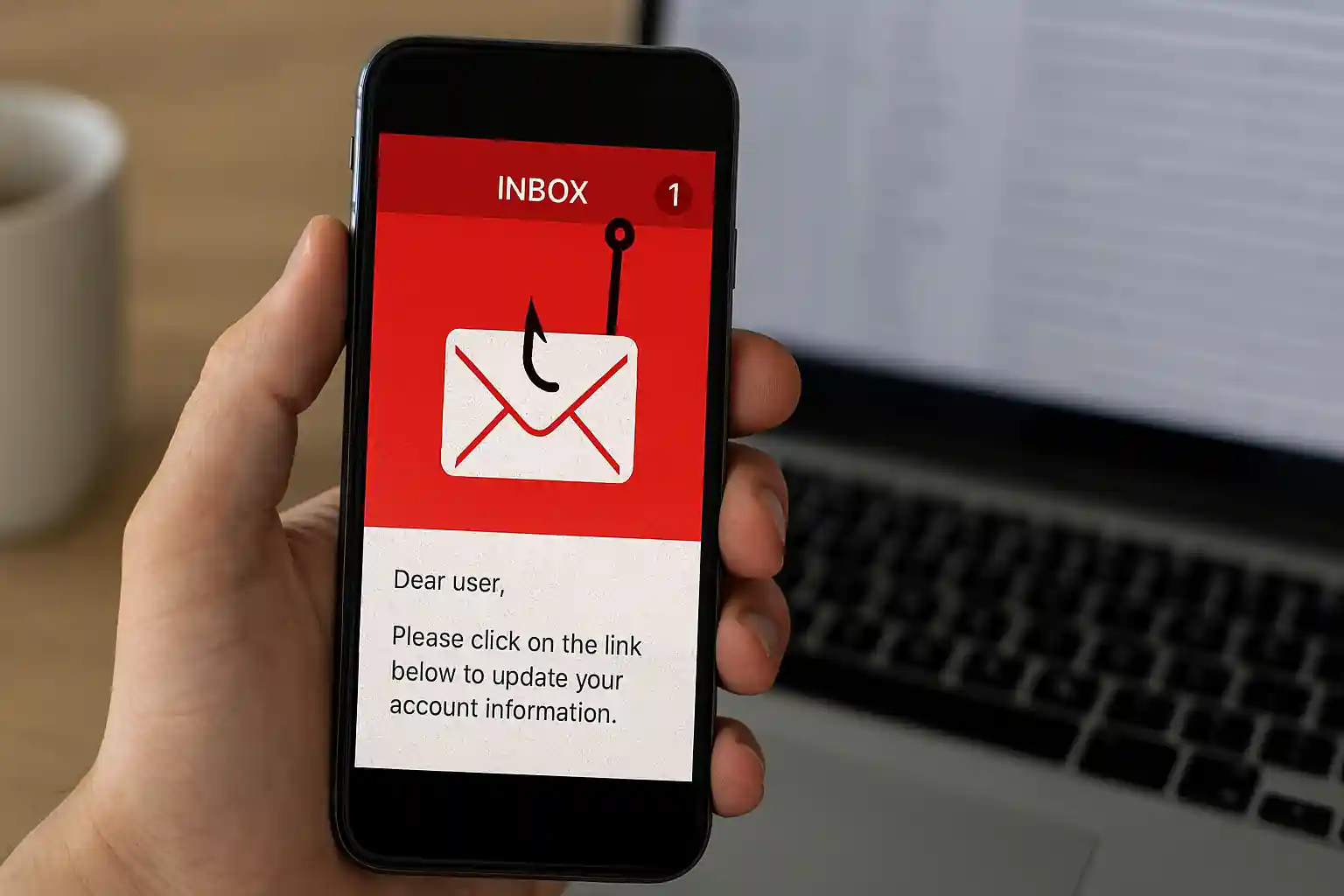
What Is a Phishing Attack? The Complete Guide to Every Phishing Scam, Prevention Strategy, and Protection Solution
If you’ve landed here searching for what is a phishing attack, you’re not alone. Every day, businesses and individuals fall victim to a phishing scam that compromises passwords, exposes sensitive data, and drains financial accounts.
At mail experts, we specialize in helping organizations understand, prevent, and eliminate phishing threats before they cause damage. This guide is your comprehensive resource to understand phishing, recognize red flags, and implement proven phishing attack prevention strategies that actually work.
If you’re serious about protection, we’ll also show you how to avoid phishing scams and how to implement enterprise-grade defense through our dedicated phishing protection services.
Phishing Attack Explained: What You Must Know
Phishing Definition
Let’s begin with a clear phishing definition.
A phishing attack is a type of cybercrime where an attacker uses deception and social engineering techniques to trick victims into revealing sensitive information such as passwords, login credentials, account numbers, credit card numbers, financial information, or other sensitive data.
Phishing is a type of attack that relies heavily on manipulation rather than technical hacking. In fact, phishing is a type of social engineering that exploits human trust instead of system vulnerabilities.
Phishing attacks use:
-
Fake emails
-
Fraudulent text message alerts
-
Malicious links
-
Spoof websites
-
Fake website login pages
-
Malicious attachments
The goal? To steal personal information, account information, or install malware by tricking users into clicking a malicious link or downloading malware.
Phishing Scam: Why It’s So Dangerous
Understanding the Modern Phishing Scam
A phishing scam is not just random spam. It is often a carefully orchestrated phishing campaign designed to appear legitimate.
Phishing threats have evolved. Today’s phishing emails and phishing messages:
-
Appear legitimate
-
Spoof trusted brands
-
Use social proof
-
Create a sense of urgency
-
Use social manipulation tactics
-
Mimic real login pages
-
Target specific individuals
Many phishing emails are almost indistinguishable from legitimate communication.
Phishing is the most common form of social engineering attacks worldwide. It remains the most common type of attack targeting businesses and individuals alike.
Scam Tactics: How Attackers Manipulate Victims
Scam Psychology and Social Engineering
Phishing is a form of social engineering that manipulates emotions like:
-
Fear
-
Urgency
-
Curiosity
-
Authority
-
Reward
A phishing attack involves convincing a victim to:
-
Share sensitive data
-
Share sensitive financial information
-
Click a malicious website link
-
Download an attachment
-
Provide login credentials
-
Enter credit card numbers
-
Reveal social security numbers
Attack methods used in phishing rely on social engineering techniques, not just technology.
Avoid Phishing Scams: Why Awareness Matters
To avoid phishing scams, you must first understand phishing work and how phishing uses deception.
Many phishing targets are unaware that:
-
The sender is spoofed
-
The malicious link redirects to a fake website
-
The email security system was bypassed
-
The message contains malware
-
The phishing message is part of a larger phishing campaign
Security awareness is your first line of defense.
Protect Yourself From Phishing: Start Here
How to Protect Yourself From Phishing
If you want to protect yourself from phishing, you need:
-
Email security solutions
-
Strong spam filters
-
Security tools that detect malicious website activity
-
Employee security awareness training
-
Multi-factor authentication
-
Continuous phishing protection monitoring
At mail experts, we help individuals and businesses implement real phishing prevention strategies that stop threats before damage occurs.
Phishing Attack Prevention: The Business Imperative
Why Phishing Attack Prevention Is Non-Negotiable
Phishing attack prevention is not optional anymore.
Phishing is a targeted phishing strategy in many cases. Spear phishing attacks target executives, finance teams, and HR departments to steal financial information and credentials.
A targeted phishing attack can cost organizations:
-
Reputational damage
-
Legal consequences
-
Stolen account information
-
Identity theft
-
Compromised card information
-
Lost customer trust
If you want serious defense, explore our professional phishing protection service here:
👉 https://mailexperts.io/services/phishing-protection/
This page explains how we help organizations detect, prevent phishing, and protect their infrastructure from evolving phishing threats.
Types of Phishing Attacks You Must Recognize
Types of Phishing Attacks
There are many different types of phishing. Understanding the different types of phishing attacks is crucial for effective phishing prevention.
1. Email Phishing
Email phishing is the most common phishing method. Many phishing emails are designed to look like invoices, password reset alerts, or bank notifications.
Email phishing often includes:
-
Malicious link
-
Attachment containing malware
-
Fake website login page
-
Urgent request to share sensitive information
2. Spear Phishing
Spear phishing is a targeted form of phishing. Spear phishing attacks focus on specific individuals or departments.
Spear phishing is a targeted phishing attack that uses personal information on social media to craft convincing messages.
Phishing is a targeted phishing strategy in spear phishing scenarios.
3. Whaling
Whaling is a type of phishing attack targeting executives. Whaling attacks use authority manipulation to steal account numbers or financial information.
4. Clone Phishing
Clone phishing involves copying a legitimate email and replacing the link with a malicious link. The attacker spoofs the sender and inserts a link to a phishing page.
5. Vishing (Voice Phishing)
Vishing or voice phishing involves phone calls pretending to be banks or IT support. A vishing attack convinces victims to share sensitive data over the phone.
6. SMS Phishing (Smishing)
SMS phishing uses a fraudulent text message to lure victims to a malicious website.
7. Angler Phishing
Angler phishing occurs on social media platforms where attackers impersonate customer support accounts.
Phishing Email: What to Look For
Common Phishing Email Red Flags
Identify a phishing email by spotting:
-
Poor grammar
-
Sense of urgency
-
Suspicious attachment
-
Fake website domain
-
Spoof sender address
-
Requests to share sensitive data
-
Suspicious login credentials request
Red flags of phishing often include unusual requests for financial information or card information.
Phishing Techniques Used by Attackers
Advanced Phishing Techniques
Modern phishing techniques include:
-
Domain spoof
-
Clone phishing replication
-
Malicious website redirects
-
Credential harvesting
-
Malware delivery
-
Business email compromise
-
Social engineering attacks
Attackers conduct phishing using automation and phishing campaign infrastructure.
Phishing uses psychological triggers and technical deception.
Common Phishing Examples
Common Examples of Phishing
Common phishing scenarios include:
-
Fake invoice scam
-
Account suspension alerts
-
Tax refund scam
-
Payroll update request
-
IT support credential reset
-
Bank verification phishing message
Many phishing emails attempt to steal login credentials and account information.
Sign of Phishing: How to Identify a Phishing Attempt
Identify Phishing Before It’s Too Late
To identify a phishing attempt, watch for:
-
Suspicious sender address
-
Unexpected attachment
-
Link to a phishing domain
-
Requests to share sensitive financial information
-
Threatening tone
-
Urgent password reset message
Identify a phishing message by checking whether it appears legitimate but feels slightly off.
Report Phishing Immediately
If you encounter a phishing attempt, report phishing to your security team immediately.
Organizations should:
-
Use phishing reporting tools
-
Alert IT department
-
Block malicious website domains
-
Update spam filters
-
Strengthen email security solutions
Phishing Threats Facing Businesses Today
Phishing threats are growing more sophisticated. Many phishing campaigns now:
-
Use AI-generated content
-
Mimic trusted vendors
-
Target finance departments
-
Bypass basic security tools
-
Deliver malware via attachment
-
Steal credential data
Phishing targets are no longer random. They are strategic.
Social Engineering: The Core of Phishing Work
Phishing work depends on social engineering. Social engineering attacks exploit human psychology.
Phishing is a type of social engineering and a form of social engineering attack that relies on deception.
Phishing to access sensitive information often starts with small requests that escalate.
Protect Your Organization From Phishing
Enterprise-Level Phishing Protection
If you want to protect your organization from phishing, you need:
-
Advanced email security
-
Security awareness training
-
Phishing simulation campaigns
-
Spam filters optimization
-
Malicious link detection
-
Real-time phishing threat intelligence
-
Account information monitoring
At mail experts, we provide comprehensive phishing protection solutions tailored to your organization’s risk profile.
Learn more here:
👉 https://mailexperts.io/services/phishing-protection/
Phishing Prevention Strategy Framework
Phishing Prevention Best Practices
Effective phishing prevention includes:
-
Employee education
-
Multi-factor authentication
-
Anti-malware scanning
-
Real-time malicious link scanning
-
Email authentication protocols
-
Regular phishing campaign simulations
-
Security tools upgrades
Prevent phishing by combining technology with human training.
Understand Phishing in the Modern Threat Landscape
To truly understand phishing, you must recognize that phishing is the most common attack method used by cybercriminals.
Phishing is used in phishing campaigns that:
-
Harvest credential data
-
Deliver malware
-
Steal sensitive information
-
Conduct identity theft
-
Compromise account numbers
-
Access social security numbers
Many phishing operations are run like professional businesses.
How Phishing Works Step by Step
Phishing Work Explained
-
Attacker selects phishing targets.
-
Attacker creates spoof email or text message.
-
Attacker includes malicious link or attachment.
-
Victim clicks link to a phishing page.
-
Victim enters login credentials or financial information.
-
Attacker gains access.
-
Data is used for fraud or sold.
That is how phishing work typically unfolds.
Red Flags of Phishing You Cannot Ignore
Red Flags of Phishing in Emails and Messages
-
Unexpected request for password
-
Generic greeting
-
Urgent tone
-
Suspicious domain
-
Misspellings
-
Fraudulent attachment
-
Request to share sensitive account information
These are classic signs of phishing.
Phishing Is a Type of Social Engineering: Why That Matters
Because phishing is a type of social engineering, technical defenses alone are not enough.
You must combine:
-
Security awareness
-
Email security solutions
-
Security tools
-
Proactive phishing attack prevention
Simple Phishing vs Targeted Phishing Attack
Simple phishing sends mass spam emails. A targeted phishing attack (like spear phishing) focuses on specific victims.
Spear phishing is a targeted phishing approach that often leads to large financial losses.
Many Phishing Emails: Why Volume Matters
Many phishing emails are sent daily to overwhelm spam filters.
Even advanced spam filters can miss sophisticated phishing messages.
Protect Yourself From Phishing Today
Don’t wait for an attacker to conduct phishing against you.
Take action now.
If you want complete phishing protection and professional phishing prevention strategy implementation, visit:
👉 https://mailexperts.io/services/phishing-protection/
For deeper understanding about malicious links, read our detailed guide:
👉 https://mailexperts.io/what-is-phishing-link/
Final Thoughts: What Is a Phishing Attack and Why It Demands Immediate Action
A phishing attack is more than a simple scam. It is a sophisticated form of social engineering designed to steal sensitive data, financial information, login credentials, and personal information.
Phishing threats are increasing. Attack methods are evolving. Attackers use phishing techniques that appear legitimate and bypass basic security.
The only solution is proactive phishing attack prevention combined with enterprise-level phishing protection.
At mail experts, we help you:
-
Identify phishing
-
Prevent phishing
-
Protect your organization from phishing
-
Implement advanced email security solutions
-
Strengthen security awareness
-
Stop identity theft before it happens
If you’re serious about protecting your business, start here:
👉 https://mailexperts.io/services/phishing-protection/
Your security team cannot fight phishing threats alone. Let mail experts secure your email infrastructure today.