
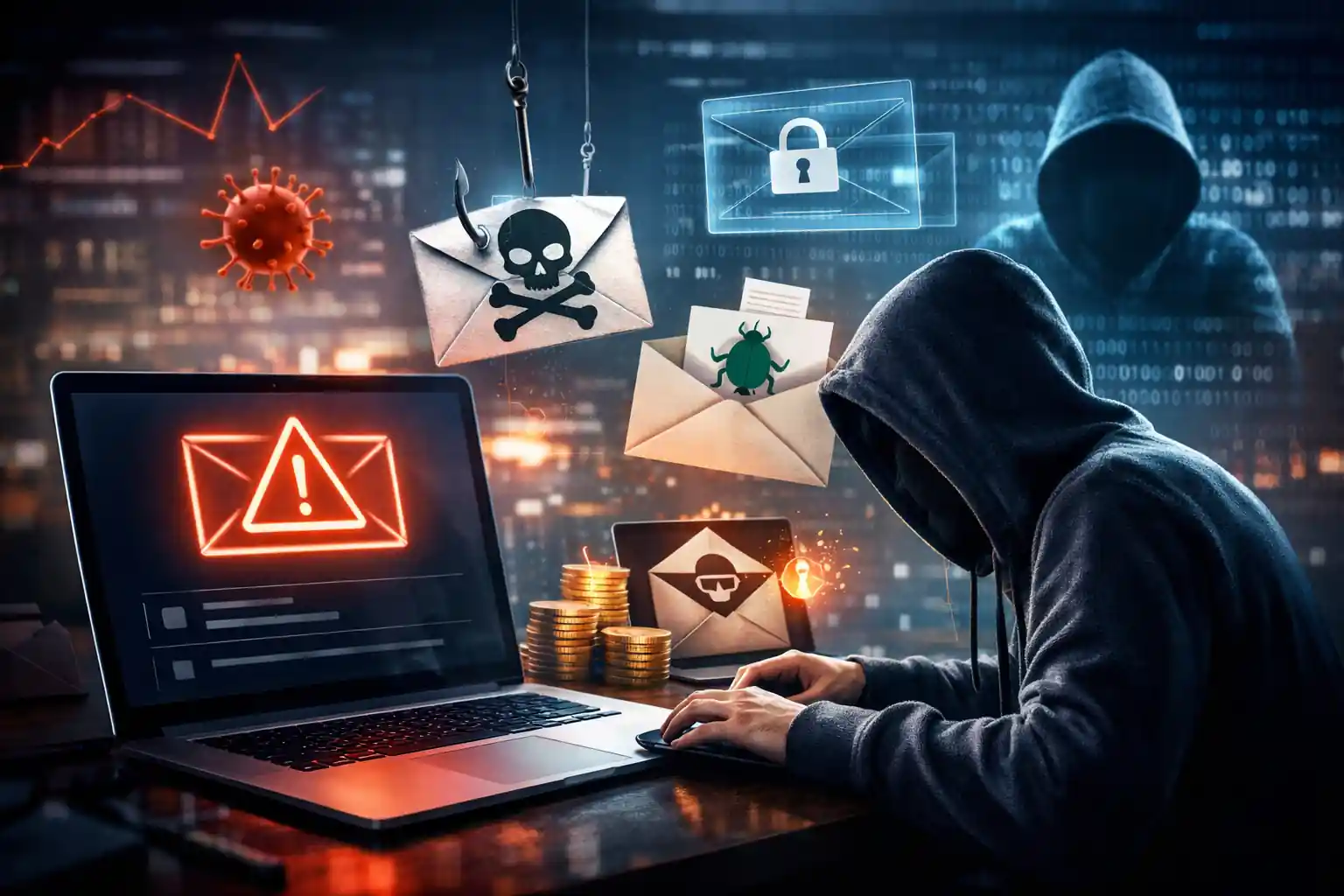
Understanding Security Threats in 2026 and the Future of Email Security
The year 2026 marks a critical turning point in cybersecurity. As organizations become more dependent on cloud email, remote work, and digital collaboration, security threats in 2026 are evolving at an unprecedented pace. Email remains the primary communication channel for businesses worldwide, making email security threats in 2026 one of the biggest cyber risks for organizations in every industry.
This page helps you discover the top email security threats shaping the cyber landscape. We explore how cyber threats in 2026 are changing, why traditional security models fail, and how cybercriminals exploit email systems using artificial intelligence, social engineering, and advanced malware.
To build a strong foundation, organizations must understand how email security, cyber security, and risk management intersect in a world where threats are getting more sophisticated than ever before.
The State of Cyber Security Threats in 2026
Why Cyber Threats in 2026 Are More Dangerous Than 2025
Compared to 2025, today’s cyber threats are faster, smarter, and more automated. Attackers no longer rely on simple phishing emails or obvious malware attachments. Instead, they use generative AI, zero-day exploits, and ai-powered impersonation techniques to bypass security systems.
Modern security threats now target:
-
Business email accounts
-
Cloud email platforms like Microsoft 365
-
Service providers and supply chains
-
Identity and access controls
Without strong email security solutions, attackers can gain access to email, steal data, and cause massive financial loss.
For a deeper overview of why email protection is critical, see this guide on
👉 email spam protection and filtering:
https://mailexperts.io/spam-filter-spam-protection-why-your-business-needs-it/
Top Email Security Threats in 2026 Explained
1. AI-Powered Phishing Attacks
How Phishing Threats Are Evolving in 2026
Phishing attacks remain the most common email threat, but in 2026, phishing has become ai-driven. Attackers use generative AI to craft highly personalized phishing emails that mimic tone, branding, and internal language.
These phishing email attacks often:
-
Impersonate executives
-
Bypass traditional email filtering
-
Steal credential and authentication details
-
Lead to account takeover
AI enables attackers to scale phishing while maintaining realism, increasing the biggest risk to organizations.
Learn more about defending against phishing here:
👉 https://mailexperts.io/phishing-protection/
2. Business Email Compromise and Email Impersonation
Email Compromise as a Primary Cyber Security Threat
Email compromise is one of the most damaging security threats in 2026. Attackers impersonate trusted senders to redirect payments, steal sensitive data, or exploit internal workflows.
Common tactics include:
-
CEO fraud
-
Vendor impersonation
-
Email spoofing
-
Social engineering
Once attackers gain access to email, they can move laterally, manipulate conversations, and cause severe downtime and data breaches.
👉 Learn more about securing business email environments:
https://mailexperts.io/business-email-security/
3. Ransomware Delivered Through Email
Ransomware Remains a Top Cyber Security Threat
Ransomware continues to rank among the top cyber security threats in 2026. Email remains the most common delivery method, often disguised as invoices, QR codes, or shared documents.
Modern ransomware campaigns use:
-
Zero-day exploits
-
Encrypted payloads
-
Cloud-based command-and-control
-
Malware embedded in legitimate services
Once triggered, ransomware can steal data, encrypt systems, and halt business continuity.
👉 Learn more about ransomware and malware email protection:
https://mailexperts.io/malware-ransomware-email-protection/
4. Credential Theft and Account Takeover
Why Account Takeover Is a Major Risk in 2026
Credential harvesting is central to many email security threats expected in 2026. Attackers steal login credentials through phishing, malicious links, and fake authentication portals.
Without strong multi-factor authentication (MFA), attackers can:
-
Take control of email accounts
-
Access cloud email and business systems
-
Launch internal phishing campaigns
-
Exfiltrate sensitive data
Strong identity protection and access controls are essential security measures.
5. Malware and Zero-Day Email Attacks
The Rise of Zero-Day Malware in Email
Zero-day malware exploits vulnerabilities before vendors can release a patch. In 2026, attackers increasingly weaponize zero-day threats using email delivery.
Malicious email attachments may:
-
Evade signature-based detection
-
Execute in memory
-
Exploit unpatched systems
-
Disable security tools
Organizations must prioritize patch management, threat detection, and continuous monitoring.
6. Social Engineering and Human Exploitation
Social Engineering as a Cyber Attack Vector
Social engineering remains one of the most effective types of cyber attacks. Attackers manipulate trust rather than technology.
Common techniques include:
-
Urgency-based requests
-
Fake support messages
-
Impersonation of service providers
-
Exploiting insider trust
Even advanced security systems fail when users are deceived. Security awareness and best practices training are essential.
7. Insider Threats and Privileged Abuse
Insider Threats in Organisations in 2026
Not all threats come from outside. The insider threat is growing in organisations in 2026, driven by remote work, cloud access, and poor access governance.
Insider risks include:
-
Accidental data exposure
-
Malicious data theft
-
Unauthorized access to email
-
Non-compliance with security policies
Continuous audit, access reviews, and zero trust security models reduce insider risk.
8. Supply Chain and Third-Party Email Risks
Supply Chain Attacks via Email
Attackers increasingly exploit the supply chain by compromising vendors and trusted partners.
Once inside a partner’s email system, attackers can:
-
Distribute malicious emails
-
Impersonate legitimate senders
-
Bypass email filtering
-
Steal data across multiple organizations
Third-party risk management is now a critical cyber security requirement.
9. QR Code and Emerging Email Exploits
QR Code Phishing and New Exploit Techniques
QR code phishing is an emerging email security threat in 2026. Attackers embed QR codes in emails to bypass URL scanning tools.
These attacks can:
-
Redirect users to malicious sites
-
Steal authentication tokens
-
Install malware on mobile devices
-
Evade traditional security
Modern web security tools must adapt to these new attack vectors.
10. AI-Driven Cyber Attacks and Threat Intelligence Gaps
AI vs AI in Cybersecurity
In 2026, attackers use artificial intelligence faster than many defenders. AI enables:
-
Automated phishing campaigns
-
Real-time impersonation
-
Adaptive malware
-
Rapid exploit development
Organizations must deploy ai-powered and ai-driven email security solutions that use threat intelligence and actionable insights.
Email Security Best Practices for 2026
Strengthening Your Security Posture
To reduce exposure to security threats in 2026, organizations should:
-
Enforce MFA across email accounts
-
Encrypt sensitive data
-
Implement zero trust architectures
-
Enable continuous monitoring
-
Conduct regular security audits
-
Patch systems in real time
A strong security posture depends on layered defenses and modern email security solutions.
Why Traditional Email Security Is No Longer Enough
Traditional security relies on static rules and signature-based detection. In 2026, this approach fails against:
-
AI-generated phishing
-
Zero-day malware
-
Sophisticated impersonation
-
Cloud-native attacks
Modern threats require adaptive email protection, advanced email filtering, and real-time threat detection.
Exploring the Top Cyber Security Threats of 2026
Discover the Top Risks Before They Become Breaches
Organizations that explore the top cyber risks gain a strategic advantage. Understanding threats of 2026 allows teams to protect data security, maintain compliance, and prevent financial loss.
Ignoring email security exposes organizations to:
-
Data breaches
-
Regulatory non-compliance
-
Reputational damage
-
Loss of business continuity
Email Security as a Foundation of Cybersecurity in 2026
Email remains the primary attack surface for modern cyberattacks. Without strong email security, even the best security tools fail.
To build resilience, organizations must align:
-
Email security
-
Identity protection
-
Cloud email defenses
-
Threat intelligence
-
Risk management strategies
Learn more about comprehensive email protection at:
👉 https://mailexperts.io/
Final Thoughts: Preparing for Security Threats in 2026
The top email security threats in 2026 highlight one reality: cyber threats are evolving faster than ever. Attackers leverage AI, automation, and human psychology to bypass outdated defenses.
Organizations that invest in modern cyber security, email security, and continuous improvement will be best positioned to defend against the email security threats expected in the years ahead.
Staying informed is the first step toward protection. Understanding these security threats in 2026 empowers organizations to act before attackers do.